How-to
Sherpa Mini Klipper config: rotation distance and current
Annex Engineering's own block sets rotation_distance 22.67895 with gear_ratio 50:8 for the 8-tooth motor pinion (50:10 for a 10-tooth pinion), 16 microsteps and a TMC2209 run_current of 0.30 A RMS. Paste it over your old extruder values, keep your pins, then calibrate.
Edited by 3D Printeray EditorsPublished Last verified 8 min read
In this section: Extruders(14)
On this page (9)

Set rotation_distance: 22.67895 with gear_ratio: 50:8 (3.629 if you leave out the gear ratio), microsteps: 16 and a TMC2209 run_current of 0.30 A. Those are Annex Engineering’s published starting values for the Sherpa Mini. Then calibrate rotation_distance by measuring, and start retraction at 0.4 mm.
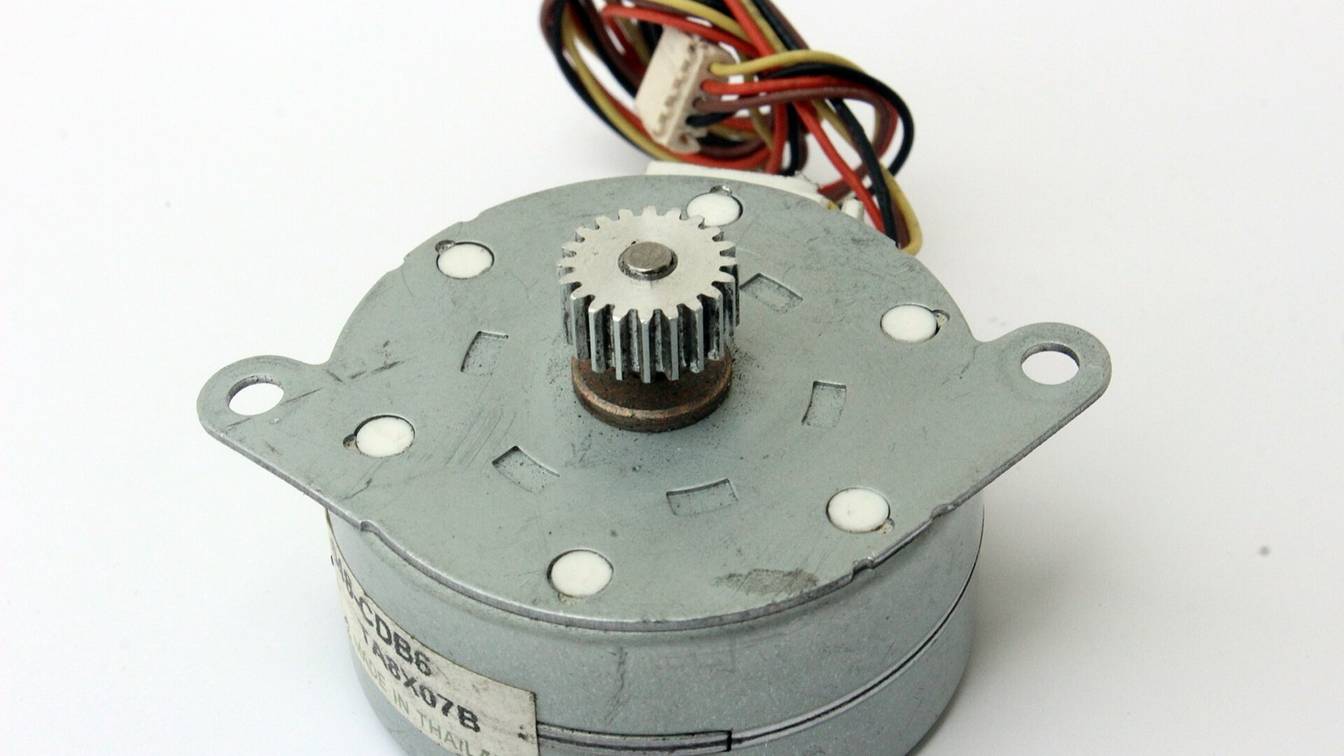
- Pinion: most likely 8 teeth. Annex’s block is written for an 8-tooth motor pinion, and the LDO pancake motor sold for the Sherpa Mini is listed as 8T. Count the teeth on the small gear on the motor shaft, or look for the tooth count in the motor’s part name or listing. If it has ten, use
gear_ratio: 50:10. - Current: start at 0.30 A. That is Annex’s minimum for this extruder, and 0.35 A is its maximum. LDO’s own Voron 0 config runs its 20 mm pancake motor at 0.6 A, so the motor has headroom, but a hot motor can soften the printed plastic housing. Raise the current in small steps only if the extruder clicks or skips.
The hardware itself is covered in Sherpa Mini extruder; other extruders are in extruder upgrades.
Sherpa Mini printer.cfg: the full extruder block
This is Annex’s block from its firmware repository, with added comments on what to keep from your own config. Paste it over the matching lines; do not add a second [extruder] section.
[extruder]
# KEEP from your config: step_pin, dir_pin, enable_pin, heater_pin,
# sensor_type, sensor_pin, nozzle_diameter, filament_diameter,
# control and pid_*, min_temp, max_temp, min_extrude_temp.
# DELETE your old rotation_distance and any old gear_ratio line.
# SET pressure_advance to 0 until you retune it.
rotation_distance: 22.67895     # 5 mm shaft-driven Bondtech gears
gear_ratio: 50:8                # 8-tooth motor pinion; 50:10 for a 10-tooth pinion
microsteps: 16
full_steps_per_rotation: 200    # 1.8° motor
max_extrude_only_distance: 1400.0
max_extrude_only_velocity: 75.0
max_extrude_only_accel: 1500

[tmc2209 extruder]
# KEEP from your config: uart_pin, tx_pin, uart_address and
# sense_resistor. They belong to your mainboard or toolhead board.
interpolate: True               # Annex's setting; see the TMC2209 notes
run_current: 0.30               # amps RMS (0.42 A peak); Annex's maximum is 0.35
The three max_extrude_only lines only govern extrude-only moves and retractions, not printing moves. Klipper rejects any extrude-only move longer than max_extrude_only_distance, which defaults to 50 mm; Annex’s 1400 mm leaves room for long filament load and unload moves.
How to set up the Sherpa Mini in Klipper
- Back up the config. Download a copy of
printer.cfg(and the toolhead board’s file, if the motor plugs into one) before editing. - Count the pinion teeth. Look at the gear on the motor shaft. Eight teeth means
gear_ratio: 50:8; ten teeth meansgear_ratio: 50:10. - Replace the extruder values. Paste the block above. Keep your pins, heater and thermistor lines. Delete the old extruder’s
rotation_distanceandgear_ratio, which belong to a different gear train. - Set the driver section. Keep
uart_pin,tx_pin,uart_addressandsense_resistorfrom your board’s config, and setrun_current: 0.30. - Check the direction. Run
FIRMWARE_RESTART, heat the hotend to printing temperature and extrude a few millimeters. If the filament moves up, add a!before thedir_pinvalue (or remove the one that is there) and restart. - Calibrate rotation_distance. Mark the filament about 70 mm above the extruder, send
G91thenG1 E50 F60, and measure how far the mark moved. Newrotation_distance= current value (22.67895 the first time) × that length ÷ 50. Leavegear_ratioalone. Repeat if the result was off by more than about 2 mm. - Tune pressure advance. Print Klipper’s tuning tower with
FACTOR=.005(below) and write the result intopressure_advanceunder[extruder]. - Set retraction. Start at 0.4 mm and 30 mm/s in the slicer, or in
[firmware_retraction]if your slicer sends G10 and G11. - Check motor heat. After a long print the motor may feel warm but should not be painful to touch. Raise
run_currentonly if the extruder clicks or skips.
What is the rotation distance for the Sherpa Mini?
The Sherpa Mini’s rotation distance is 22.67895 mm with gear_ratio: 50:8, Annex Engineering’s published value for its 5 mm shaft-driven Bondtech drive gears and an 8-tooth motor pinion. Without a gear_ratio line, the same setting is 3.629 mm. With a 10-tooth pinion, use gear_ratio: 50:10, or 4.536 mm without one.
With gear_ratio set, Klipper reads rotation_distance as the filament moved by one turn of the drive gear (the final gear), not of the motor. Without it, the value is per motor turn, so divide by the gear ratio:
rotation_distance (no gear_ratio) = 22.67895 × pinion teeth ÷ 50
| Motor pinion | With gear_ratio |
Without gear_ratio (derived) |
|---|---|---|
| 8 teeth | rotation_distance: 22.67895, gear_ratio: 50:8 |
3.629 (22.67895 × 8 ÷ 50 = 3.628632) |
| 10 teeth | rotation_distance: 22.67895, gear_ratio: 50:10 |
4.536 (22.67895 × 10 ÷ 50 = 4.53579) |
Both forms move the same amount of filament. Keeping gear_ratio means the 22.67895 stays recognizable and only that number changes when you calibrate. rotation_distance does not change with microsteps: Klipper works out the step count itself.
Treat 22.67895 as a starting point. Klipper’s documentation says an extruder’s real rotation distance differs from printer to printer, and even between filament spools, because the drive gears’ grip varies. Annex’s block gives one value, for “5 mm shaft driven Bondtech gearsets”, and none for the Bondtech RIDGA v2 gears supported since Release 2. Measure yours (step 6).
Which gear_ratio does the Sherpa Mini use in Klipper?
Use gear_ratio: 50:8 when the motor carries an 8-tooth pinion, the standard in Annex’s block, and 50:10 for a 10-tooth pinion. The 50 is the Sherpa Mini’s main gear; Bondtech lists 50 teeth for its RIDGA v2 gear set and says it meshes with an 8-tooth or 10-tooth motor gear.
A wrong ratio shows up as a large extrusion error, not a small one:
- 50:10 set on an 8-tooth motor: Klipper turns the motor 5 times for each drive gear turn, but the 8-tooth pinion needs 6.25, so the extruder feeds 80% of what the slicer asks for.
- 50:8 set on a 10-tooth motor: Klipper turns the motor 6.25 times where 5 would do, so it feeds 125%.
The 8-tooth motor sold for the Sherpa Mini is a version of the LDO-36STH20-1004AHG. Annex’s README says a pinion-equipped pancake stepper is required for Release 2. Motor choice, weight and the build are covered in Sherpa Mini extruder.
What run current should the Sherpa Mini motor use?
Start the Sherpa Mini motor at run_current: 0.30 amps RMS (root mean square), Annex Engineering’s published minimum, with 0.35 A as Annex’s maximum. Those equal 0.42 A and 0.49 A peak. LDO Motors, the maker of the LDO-36STH20-1004AHG pancake motor, runs that motor at 0.6 A in its own Voron 0 kit config.
Published values, sorted by run current:
| Motor | Rating | run_current (A RMS) |
Published by |
|---|---|---|---|
| NEMA 14 in Annex’s block (model not named) | Not stated | 0.30 minimum, 0.35 maximum | Annex Engineering |
| LDO-36STH17-1004AHG (17 mm body) | 1 A | 0.3 | LDO Voron 0 kit config |
| LDO-36STH20-1004AHG (20 mm body) | 1 A; LDO’s drawing for the 6-tooth version lists 1.0 A per phase and 100 mN·m holding torque | 0.6 | LDO Voron 0 kit config |
To find your value, start at 0.30 and raise it in small steps only if the extruder clicks or skips at your highest flow. Test without editing the config using SET_TMC_CURRENT STEPPER=extruder CURRENT=0.35, then write the value that works into run_current.
Klipper’s advice is to prefer higher current as long as the motor does not get too hot, and it warns that a very hot motor can melt attached plastic parts. The Sherpa Mini’s housing is printed plastic: Annex recommends ASA (acrylonitrile styrene acrylate), with polycarbonate (PC) as the alternate. On an LDO Nitehawk-36 toolboard, LDO’s config recommends staying below 0.7 A.
Skipping is not always a current problem. Klipper’s documentation notes that a high pressure advance value (over 0.200) combined with high acceleration can leave the extruder short of torque; its fix is a lower acceleration or disabling pressure advance.
TMC2209 notes
- RMS, not peak. Klipper’s
run_currentis in amps RMS. Annex’s comments convert it to peak by dividing by 0.707. - sense_resistor. Klipper’s default is 0.110 ohms; LDO’s Nitehawk-36 config uses 0.100. Klipper sets the current from this value, so keep the one your board’s config specifies.
- interpolate. Annex uses
True. Klipper’s documentation says interpolation adds a small positional error. For best accuracy it suggests spreadCycle withinterpolate: False, and 64 or 128 microsteps to keep the noise similar. LDO’s Voron 0 config usesFalsewith 32 microsteps. Changingmicrostepsdoes not changerotation_distance. - spreadCycle or stealthChop. Klipper defaults to spreadCycle. Its docs say stealthChop may produce lower motor torque or more motor heat, and LDO’s config comments say to avoid stealthChop on the extruder.
- hold_current. Leave it unset, as Klipper’s documentation recommends.
What retraction settings work with the Sherpa Mini?
Start the Sherpa Mini at 0.4 mm of retraction at 30 mm/s, Annex Engineering’s published starting point. Do not exceed 30 mm/s, the limit Annex sets. That length is shorter than the 0.8 to 1.5 mm usually given for direct drive extruders, so lengthen it in small steps only if stringing remains.
Set it in the slicer, or use Klipper’s firmware retraction if your slicer sends G10 and G11:
[firmware_retraction]
retract_length: 0.4    # Annex's starting point
retract_speed: 30      # Annex: do not exceed 30 mm/s
With firmware retraction you can tune during a print with SET_RETRACTION RETRACT_LENGTH=0.5, then copy the value that works into the config.
The 0.8 to 1.5 mm range comes from Cura’s Ender-3 S1 profile (0.8 mm) and Micro Swiss’s direct drive kits (1 mm for the NG, at most 1.5 mm for the original); see retraction after a direct drive conversion.
Pressure advance for the Sherpa Mini
Annex publishes no pressure advance value for the Sherpa Mini, so tune it. Klipper’s procedure for a direct drive extruder:
SET_VELOCITY_LIMIT SQUARE_CORNER_VELOCITY=1 ACCEL=500
TUNING_TOWER COMMAND=SET_PRESSURE_ADVANCE PARAMETER=ADVANCE START=0 FACTOR=.005
Use FACTOR=.020 if the Sherpa Mini feeds a long Bowden tube. Print the tower, measure the height with the sharpest corners and multiply it by the factor. Klipper puts typical results between 0.050 and 1.000, the high end usually only with Bowden extruders. Its documentation then suggests keeping a small slicer retraction (its example is 0.75 mm) with wipe on retract, and turning off z-lift on retract.
Sherpa Mini steps per mm for Marlin
At 16 microsteps the Sherpa Mini needs about 881.9 steps/mm with an 8-tooth pinion and 705.5 steps/mm with a 10-tooth pinion. Annex publishes no Marlin value; both are derived from its Klipper numbers:
steps/mm = 200 × microsteps × (50 ÷ pinion teeth) ÷ 22.67895
| Motor pinion | 16 microsteps | 32 microsteps |
|---|---|---|
| 8 teeth | 881.9 (200 × 16 × 6.25 ÷ 22.67895) | 1763.8 |
| 10 teeth | 705.5 (200 × 16 × 5 ÷ 22.67895) | 1411.0 |
For an 8-tooth pinion, send M92 E881.9 and save with M500, or set the E value of DEFAULT_AXIS_STEPS_PER_UNIT in Configuration.h. Then calibrate with the same 50 mm test as step 6: new steps/mm = old steps/mm × 50 ÷ the length that went in.
Sources
- Annex Engineering, Sherpa Mini Klipper config block (ANNEX-Printer-Firmware) (accessed November 4, 2026)
- Annex Engineering, Sherpa Mini Extruder repository and README (accessed November 4, 2026)
- Annex Engineering, Sherpa Mini print settings and file key (accessed November 4, 2026)
- Bondtech, OEM RIDGA V2 (Reversed Integrated Drive Gear Assembly V2) (accessed November 4, 2026)
- DHM Online, 8T LDO-36STH20-1004AHG motor for Sherpa Mini and Sherpa Micro extruders (accessed November 4, 2026)
- LDO Motors, LDO Voron 0 kit printer.cfg (accessed November 4, 2026)
- LDO Motors, Nitehawk-36 toolboard Klipper config (accessed November 4, 2026)
- LDO Motors, LDO-36STH20-1004AHIG(6T) specification drawing (PDF) (accessed November 4, 2026)
- Klipper documentation, Rotation distance (accessed November 4, 2026)
- Klipper documentation, Configuration reference (accessed November 4, 2026)
- Klipper documentation, TMC drivers (accessed November 4, 2026)
- Klipper documentation, Configuration checks (accessed November 4, 2026)
- Klipper documentation, Pressure advance (accessed November 4, 2026)
- Klipper documentation, G-Codes (accessed November 4, 2026)
- Ultimaker Cura, creality_ender3s1.def.json (accessed November 4, 2026)
- Micro Swiss, NG Direct Drive Extruder installation instructions (M3201, PDF) (accessed November 4, 2026)
- Micro Swiss, Direct Drive Extruder installation instructions (PDF) (accessed November 4, 2026)
- Marlin documentation, M92: Set Axis Steps-per-unit (accessed November 4, 2026)
- Marlin documentation, M500: Save Settings (accessed November 4, 2026)