Guide
Venting a Bambu Lab P1S for ABS: filter, fumes and exhaust
Vent a Bambu Lab P1S for ABS by moving air out of the room, never by opening the printer. Its stock activated carbon filter absorbs VOCs such as styrene but has no HEPA stage for ultrafine particles, and Bambu Lab's ABS guide still calls for a well-ventilated room or an exhaust system.
Published Last verified 7 min read
In this section: Bambu Lab(24)
On this page (4)
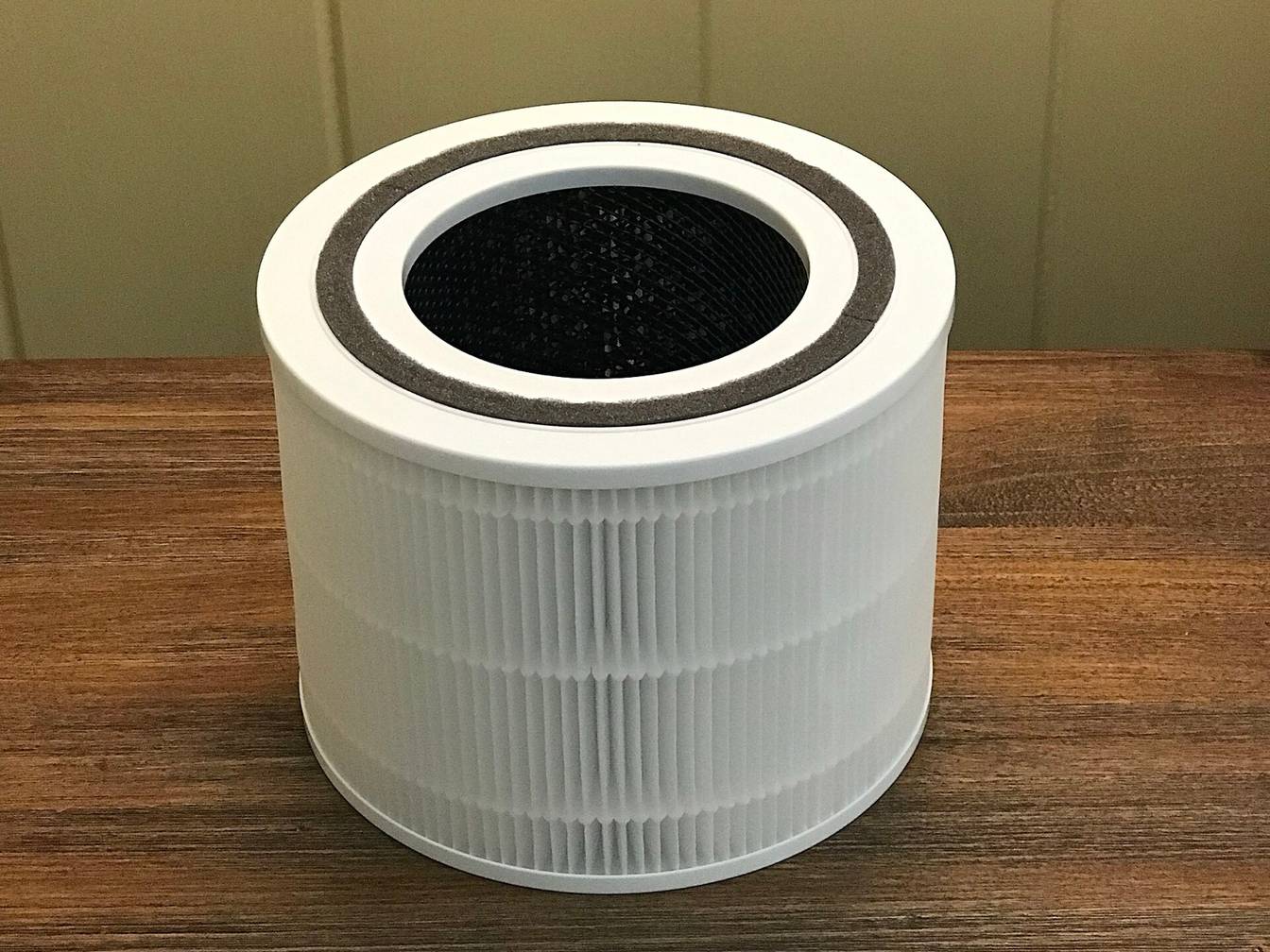

To vent a Bambu Lab P1S for ABS, send its exhaust outdoors through Bambu Lab’s printable exhaust pipe connector and a hose to a window, or ventilate the room and run an air purifier with HEPA (high-efficiency particulate air) and activated carbon filters. Keep the lid on and the door closed either way. A duct moves air only while the chamber fan runs, and Bambu Studio’s stock P1S profiles keep that fan off during ABS prints.
Is it safe to print ABS on a Bambu Lab P1S indoors?
Only with ventilation or filtration, according to Bambu Lab. Its ABS guide says to run the printer in a well-ventilated area or install air filtration or an exhaust system, and to avoid prolonged ABS printing in bedrooms and living rooms. Chamber studies measure styrene and ultrafine particles from ABS, but Bambu Lab publishes no emission figures for the P1S.
Bambu Lab’s ABS / ASA / PC Usage Guide states the hazard and the precautions:
- “At printing temperatures, ABS, ASA filaments release harmful gases such as styrene, which can be toxic and may cause dizziness or nausea.”
- “For extended print jobs, wear a mask with vapor filtration (such as an activated-carbon mask).”
- “If anyone with asthma or respiratory conditions, pregnant women, or children are present, increase ventilation or pause printing with these materials.”
The US National Institute for Occupational Safety and Health (NIOSH) defines ultrafine particles as those smaller than 100 nm. The studies below measured desktop printers in test chambers, and none of them tested a P1S.
| Study | What was measured | What it found for ABS |
|---|---|---|
| Azimi et al., Environmental Science & Technology, 2016 | Five desktop printers with up to nine filaments in a test chamber | Styrene from ABS and HIPS at about 10 to 110 µg per minute. Ultrafine particle emission rates of about 10⁸ to 10¹¹ per minute across all combinations, varying mainly by filament. The authors urge caution in poorly ventilated spaces or “without the aid of combined gas and particle filtration systems” |
| Zhang and Black (UL Research Institutes), Environment International, 2023 | 447 particle and 58 VOC emission tests under one standardized chamber method | UL’s summary lists ABS among the high emitters. Exposure modeling found personal and residential scenarios “more likely to result in high exposure levels, often exceeding recommended exposure limits” |
| NIOSH, Approaches to Safe 3D Printing, 2023 | Review of chamber and field studies | ABS “yields higher airborne ultrafine particle concentrations than PLA”. NIOSH reports that printer emissions have been associated with respiratory and cardiovascular effects, but notes: “It is unclear if these respiratory and cardiovascular effects are associated with inhaling emitted particles, organic vapors, or both.” |
Emissions vary with the printer, the filament brand and color, and the nozzle temperature.
Does the Bambu Lab P1S have a filter for ABS fumes?
Yes. The Bambu Lab P1S ships with an activated carbon filter at its chamber exhaust, and Bambu Lab lists the filter’s function as absorbing volatile organic compounds (VOCs), the gases ABS gives off. It has no HEPA stage for ultrafine particles. Bambu Lab rates each filter for 1,440 hours of printing, which is 60 days around the clock.
The P1S spec sheet lists one air filter, an “Activated Carbon Filter”, next to a closed-loop chamber temperature regulator fan. Bambu Lab’s P1 Series FAQ says the filter is there “to provide a solution for printing filaments such as ABS that are prone to emitting odors and harmful gases during the printing process.” The filter treats only the air the chamber fan moves: Bambu Lab describes it as “filtering the air from the enclosure before it is expelled outside.”
The X1 Carbon takes the same filter, which Bambu Lab sells as one part for the X1 series and P1S. The X1E adds a G3 pre-filter and an H12 HEPA filter to the carbon, and its FAQ says “The printer should still be used in a well-ventilated place.” The Bambu Lab models page compares the enclosure and chamber limits across the line.
What activated carbon catches and what it does not
Activated carbon is designed for gases, HEPA for particles.
| ABS emission | Activated carbon filter | HEPA filter |
|---|---|---|
| Styrene and other VOCs (gases) | Designed for gases. The US EPA says carbon filters “can be effective, provided that there is a large amount of material used in the filter”. Bambu Lab does not publish how much carbon the P1S filter holds | Not designed for gases. The EPA notes that “most filters are designed to filter either particles or gases” |
| Ultrafine particles (under 100 nm) | Not designed for particles | Designed for particles. NIOSH cites a filtered hood over a printer that cut particle emissions by 97 to 99%, and an enclosure exhausted outdoors through a HEPA filter that reached 99% |
Why does a P1S still smell when printing ABS?
Two things limit the stock filter. First, the chamber fan that moves air through the filter stays off during ABS prints in Bambu Studio’s stock P1S profiles. The start G-code switches it off before the first layer and turns it back on only for PLA on a bed above 45 °C. The ABS profile’s exhaust setting, 70% during the print, applies only to printers whose profile declares air-filtration support: the X1E’s does, the P1S’s does not.
Second, the carbon saturates with use and has to be replaced on Bambu Lab’s schedule (step 7 below).
How do you vent a Bambu Lab P1S for ABS?
Keep the printer closed and move the fumes out of the room. Duct the rear exhaust to a window with Bambu Lab’s printable exhaust pipe connector, which works only while the chamber fan runs, or use a HEPA and carbon air purifier. Ventilate the room either way, and leave the enclosure shut for about 20 minutes after printing.
- Keep the lid on and the door closed. NIOSH lists opening printer doors among the activities with higher potential for exposure. Bambu Lab’s filament guide answers “NO” to removing the top glass cover for ABS, and its ABS guide says to “close the front door / cover the top lid to maintain stable chamber temperature.” The P1S has no chamber heater: Bambu Lab says its chamber temperature “increases based on the temperature set for the heated bed”, which is 90 to 100 °C for ABS. ABS warping on the P1S covers the print settings.
- Duct the exhaust outdoors. Print Bambu Lab’s Exhaust Pipe Connector, linked from its wiki, in PETG or PC. Following Bambu Lab’s guide, fit it over the rear exhaust vent with two M3 × 14 × 5 partially threaded screws (rotated 180° from the X1E position). Clamp a hose to it and run the hose to a window. The guide also allows connecting “your filter” to the hose, but adds: “Not recommended to connect another external fan or device outside.” So no inline booster fan. The hose carries gases and particles away from the room, but only while the chamber fan runs.
- Decide whether the chamber fan runs. The stock P1S profiles keep it off for ABS. To run it, add
M106 P3 Splus a speed from 0 (off) to 255 (full) to the ABS filament profile’s start G-code. Any exhaust removes chamber heat the P1S cannot replace. Bambu Lab’s 70% default is set for the X1E, which heats its chamber to 60 °C. Editing Bambu Lab’s stock G-code is at the owner’s risk. - Ventilate or filter the room. NIOSH cites a recommendation of at least six air changes per hour (enough fresh air to replace the room’s volume six times an hour) or a portable HEPA air cleaner. It also cites a study that found three air changes per hour insufficient for regular printing. The EPA sizes a purifier’s clean air delivery rate (CADR) to the room: 65 cfm (cubic feet per minute) for 100 sq ft, 130 cfm for 200 sq ft, 195 cfm for 300 sq ft. CADR rates particles only, so pair the HEPA filter with activated carbon for gases.
- Print no hotter than needed. NIOSH lists “Selecting the lowest printing temperature that achieves the desired result” among emission controls. Bambu Lab’s ABS range is 240 to 280 °C, and its P1S profile prints at 270 °C (260 °C on the first layer).
- Wait before opening the door. NIOSH cites UK Health and Safety Executive research that found exposure could be reduced by keeping an enclosure closed for a “clearance time” of about 20 minutes after printing. The stock P1S end G-code switches the chamber fan off (
M106 P3 S0), so keep the room ventilation or purifier running during the wait. - Replace the carbon filter on schedule. Bambu Lab’s interval is 1,440 hours of printing time, so a printer that runs a few hours a day goes much longer than 60 days between changes. The filter was €6.99 at the Bambu Lab EU store on October 24, 2026. Slide the filter cover’s door to the left and pull the cover off by its tab. Take the old filter out and push the new one in until the door closes flush. Refit the cover left tabs first, then hinge the door back and push it until it latches flush all the way round. These are Bambu Lab’s steps for the X1 Carbon, which takes the same filter. Bambu Lab also recommends cleaning the printer after every 5 kg of ABS or ASA, as volatile residue builds up on the carbon rods and glass.
Sources
- Bambu Lab, P1S tech specs (PDF) (accessed October 24, 2026)
- Bambu Lab Wiki, P1 Series FAQ (accessed October 24, 2026)
- Bambu Lab Wiki, P1P to P1S upgrade guide (accessed October 24, 2026)
- Bambu Lab store (EU), Activated Carbon Air Filter - X1/P1 Series (accessed October 24, 2026)
- Bambu Lab Wiki, Replace the Bambu Activated Carbon Air Filter (accessed October 24, 2026)
- Bambu Lab Wiki, ABS / ASA / PC Usage Guide (accessed October 24, 2026)
- Bambu Lab Wiki, Filament guide: printer, nozzle, AMS, build plate, glue compatibility and required parameters (accessed October 24, 2026)
- Bambu Lab Wiki, Exhaust Pipe Connector Installation Tutorial (accessed October 24, 2026)
- Bambu Lab Wiki, X1E FAQ (accessed October 24, 2026)
- Bambu Studio (GitHub), P1S 0.4 nozzle machine start G-code (accessed October 24, 2026)
- Bambu Studio (GitHub), P1S 0.4 nozzle machine end G-code (accessed October 24, 2026)
- Bambu Studio (GitHub), X1E 0.4 nozzle machine profile (accessed October 24, 2026)
- Bambu Studio (GitHub), common filament profile (exhaust fan and air filtration settings) (accessed October 24, 2026)
- Bambu Studio (GitHub), ABS filament base profile (accessed October 24, 2026)
- Bambu Studio (GitHub), Bambu ABS @BBL P1S 0.4 nozzle profile (accessed October 24, 2026)
- Azimi et al., Emissions of Ultrafine Particles and Volatile Organic Compounds from Commercially Available Desktop Three-Dimensional Printers with Multiple Filaments, Environmental Science & Technology 50(3), 2016 (accessed October 24, 2026)
- Zhang and Black, Exposure hazards of particles and volatile organic compounds emitted from material extrusion 3D printing: Consolidation of chamber study data, Environment International 182, 2023 (accessed October 24, 2026)
- UL Research Institutes, Comprehensive Emissions Data from Material Extrusion 3D Printing Now Available (accessed October 24, 2026)
- NIOSH, Approaches to Safe 3D Printing: A Guide for Makerspace Users, Schools, Libraries, and Small Businesses (Publication 2024-103) (accessed October 24, 2026)
- US EPA, Guide to Air Cleaners in the Home, 2nd edition (accessed October 24, 2026)