Guide
What filaments can the Bambu Lab P1S print?
As shipped, the Bambu Lab P1S prints PLA, PETG, TPU, PVA, PET, ABS and ASA, plus nylon and PC with the bed at its 100 °C limit. Carbon- and glass-filled, glow-in-the-dark and metal-filled filaments need a hardened steel hotend and extruder gears first, and resin, solid metal, PPS-CF, PEI and PEEK are out of reach.
Published Last verified 9 min read
In this section: Bambu Lab(24)
On this page (5)
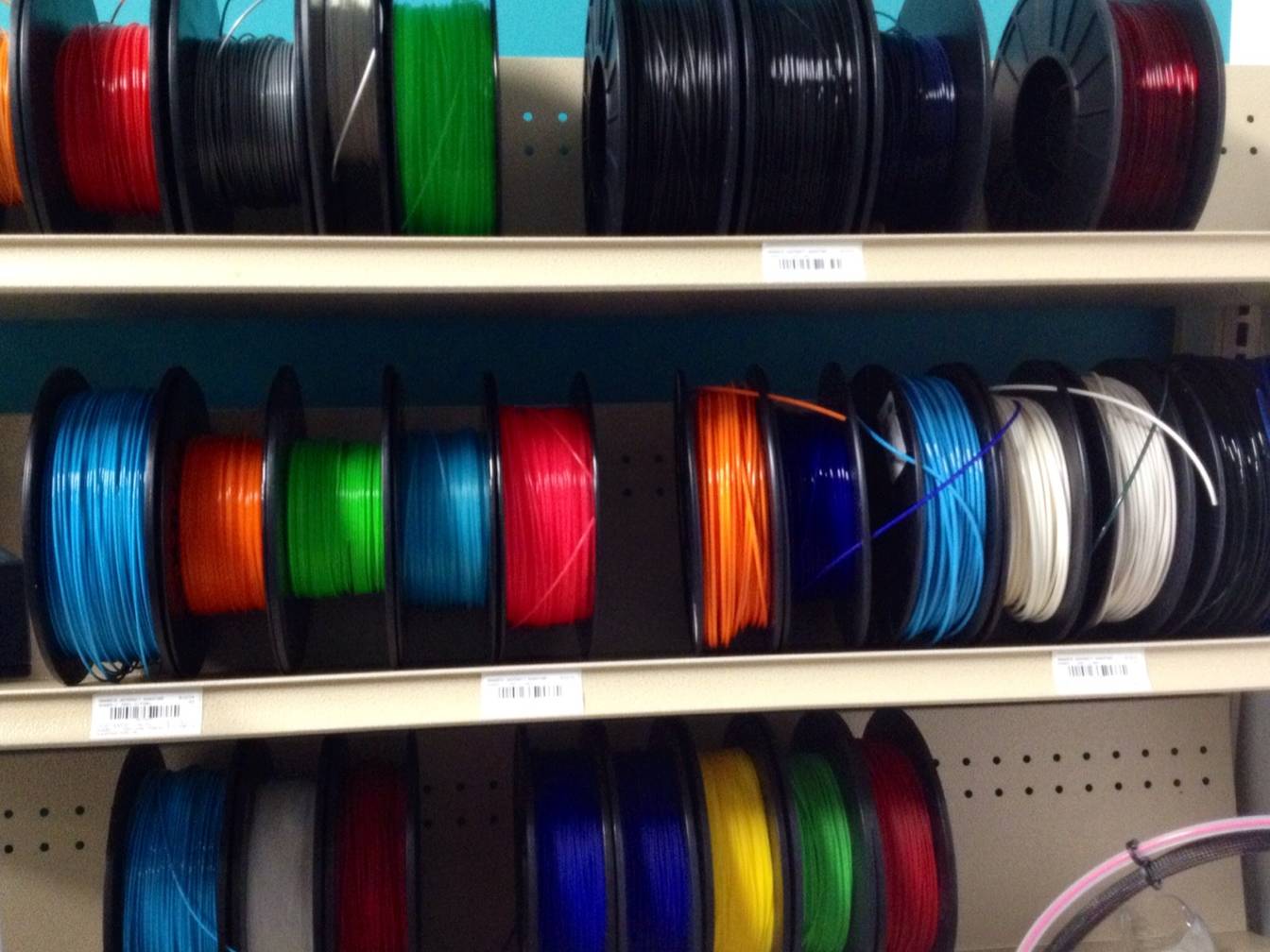

A stock Bambu Lab P1S prints PLA, PETG, TPU, PVA, PET, ABS and ASA, which Bambu Lab rates “Ideal” on its spec sheet, and nylon (PA) and polycarbonate (PC), which it rates “Capable”. Carbon-fiber, glass-fiber, glow-in-the-dark and metal-filled filaments need a hardened steel hotend and extruder gears first. Resin, solid metal and the high-temperature plastics PPS-CF, PEI and PEEK are out of reach.
What filaments can the Bambu Lab P1S print?
The Bambu Lab P1S prints PLA, PETG, TPU, PVA, PET, ABS and ASA out of the box, and nylon and PC with the bed at its 100 °C maximum. Fitting a hardened steel hotend and extruder gears adds carbon-fiber, glass-fiber, glow-in-the-dark and metal-filled filaments, including PAHT-CF and PPA-CF. Anything needing more than 300 °C at the nozzle stays out.
The hardware sets that list. Bambu Lab’s spec sheet gives the P1S a 300 °C maximum hotend temperature, a 100 °C bed, a stainless steel nozzle and steel extruder gears. The printer is enclosed and has an activated carbon filter but no chamber heater. Bambu Lab’s X1E FAQ says that printer’s chamber heating unit cannot be fitted to the P1 series.
Rows run from the coolest nozzle range to the hottest. Ranges are from Bambu Lab’s filament guide (±10 °C) unless the row names another maker. “Spec sheet” ratings come from Bambu Lab’s P1S technical specifications, the rest from the filament guide or the filament’s product page.
| Material | Nozzle range | Stock P1S | What it needs on a P1S | Bambu Lab’s rating |
|---|---|---|---|---|
| Metal-filled PLA (steel, copper or bronze powder) | 190 to 210 °C (colorFabb steelFill) | No | Hardened steel hotend and extruder gears | P1S upgrade guide: abrasive |
| PLA, including Bambu PLA Matte, Silk and Metal | 190 to 240 °C | Yes | Door open or top glass off when the bed is above 45 °C | Spec sheet: Ideal |
| PVA, BVOH (soluble supports) | 190 to 240 °C | Yes | Drying before use | Spec sheet: Ideal (PVA) |
| Wood-filled PLA | 190 to 240 °C | Yes (Bambu PLA Wood) | A 0.4 mm or larger nozzle; drying | Filament guide: Compatible, hardened nozzle “Not Required” |
| TPU | 200 to 250 °C | Yes | Soft grades fed from the external spool holder | Spec sheet: Ideal |
| Glow-in-the-dark PLA | 210 to 240 °C | No | Hardened steel hotend and extruder gears | PLA Glow page: stainless nozzles “NOT Compatible” |
| PLA-CF, PETG-CF, ABS-GF, ASA-CF, PET-CF and other fiber-filled grades | 210 to 300 °C, by base polymer | No | Hardened steel hotend and extruder gears | Spec sheet: Not Recommended |
| PETG, and unfilled PET (the filament guide gives no separate PET range) | 240 to 270 °C (PETG) | Yes | Door open or top glass off when the bed is above 60 °C | Spec sheet: Ideal |
| ABS | 240 to 280 °C | Yes | Top glass on, door closed, 90 to 100 °C bed | Spec sheet: Ideal |
| ASA | 240 to 280 °C | Yes | Top glass on, door closed, 90 to 100 °C bed | Spec sheet: Ideal |
| Nylon (PA), unfilled | 240 to 280 °C (Bambu Studio Generic PA) | Yes | Drying; bed at its 100 °C maximum | Spec sheet: Capable |
| PC | 260 to 290 °C | Yes | Drying; bed at its 100 °C maximum, against Bambu Lab’s 100 to 120 °C | Spec sheet: Capable |
| PAHT-CF, PA6-CF, PA6-GF | 260 to 300 °C | No | Hardened steel hotend and extruder gears; drying | Product pages: stainless nozzle “NOT Recommended” |
| PPA-CF | 285 to 320 °C | No | Hardened steel hotend and extruder gears; Bambu Studio’s P1S preset runs it at 290 °C | PPA-CF page: hardened nozzle “Mandatory” |
| PPS-CF | 310 to 340 °C | No | Not possible | PPS-CF page: “For X1E/H2 Series Printing Only” |
| PEI 9085 (ULTEM) | 350 to 380 °C (3DXTECH) | No | Not possible; also a 140 to 160 °C bed | Not listed |
| PEEK | 400 to 480 °C (3DXTECH) | No | Not possible; also a 140 to 180 °C bed | Not listed |
| Resin | None (cured by light) | No | A resin printer (SLA, DLP or MSLA) | Not applicable: the P1S is an FDM printer |
For every “No” row with a hardware fix, Bambu Lab’s P1S upgrade guide calls for two parts: a hardened steel Bambu Hotend - P1 Series and the Hardened Steel Extruder Gear Assembly, also sold together as the Hardened Steel Upgrade Combo. The guide warns that the most abrasive filaments can damage the stock nozzle “after a single print”. After fitting, select the new nozzle under Settings > Accessories > Nozzle on the printer.
The filament guide makes a 0.6 mm hardened nozzle the first choice for fiber-filled filament, and 0.4 mm for Bambu’s own PLA-CF, PETG-CF and PLA Glow. It rules out the 0.2 mm size for all of them. Fitting a hardened steel nozzle walks through the swap and lists prices. Printing TPU on a P1S covers which TPU grades work and how to feed them.
Can the stock P1S print PETG?
Yes, with no upgrade. Bambu Lab pairs PETG with a Textured PEI, Smooth PEI or Engineering plate at 60 to 80 °C and does not recommend the Cool Plate. Its filament guide says to open the front door or lift off the top glass above a 60 °C bed, so chamber heat does not soften the filament in the extruder. The guide’s plate table puts that threshold at 70 °C.
Can the P1S print glow-in-the-dark and wood filament?
Glow-in-the-dark filament needs the hardened upgrade first. Bambu Lab’s P1S upgrade guide classes it as abrasive, alongside carbon fiber, glass fiber and metal-filled filament.
Bambu PLA Wood prints on the stock nozzle. Bambu Lab’s nozzle guide still lists wood among the filaments for hardened steel nozzles, so for another brand’s wood fill, follow that maker’s nozzle advice.
Can the P1S print metal?
Only metal-filled plastic, not solid metal. Bambu PLA Metal counts as standard PLA in Bambu Lab’s filament guide, with no hard metallic filler, and its product page calls it compatible with all printers and nozzles. Filaments with real metal powder, such as colorFabb steelFill, need the hardened hotend and gears. colorFabb says steelFill is “quite abrasive to brass nozzles”.
Either way, the print is still plastic. Filaments made to become solid metal, such as Forward AM’s Ultrafuse 316L (now listed as discontinued), turn into stainless steel only after separate debinding and sintering. Those steps remove the plastic binder and fuse the metal in a furnace.
What can the Bambu Lab P1S not print?
The Bambu Lab P1S cannot print resin, solid metal, PPS-CF, PEI or PEEK. It is a filament printer with a 300 °C nozzle limit, a 100 °C bed limit and no chamber heater. Without a hardened steel hotend and extruder gears, Bambu Lab also advises against carbon-fiber, glass-fiber, glow-in-the-dark and metal-filled filaments.
- Resin. The P1S is a fused deposition modeling (FDM) printer, which melts filament. Formlabs describes resin printing as curing liquid resin layer by layer with a laser (SLA), a projector (DLP) or LEDs (MSLA). That takes a resin printer.
- PPS-CF. Bambu Lab sells this carbon-fiber polyphenylene sulfide “For X1E/H2 Series Printing Only”. It needs 310 to 340 °C at the nozzle and a 60 to 90 °C chamber.
- PEI and PEEK. 3DXTECH lists 350 to 380 °C at the nozzle and a 140 to 160 °C bed for its ThermaX PEI 9085 (polyetherimide), and 400 to 480 °C with a 140 to 180 °C bed for ThermaX PEEK (polyether ether ketone).
- The top of some ranges. Bambu Lab’s tables run PPA-CF to 320 °C, and PC and nylon to a 120 °C bed. On a P1S, Bambu Studio’s presets print Bambu PPA-CF at 290 °C and set Bambu PC’s plate to 100 °C.
- Heated-chamber printing. With no chamber heater, Bambu Lab’s tip for engineering filaments in a cold room is to preheat the P1S bed at its maximum for 15 minutes before starting.
Can the Bambu Lab P1S print ABS and ASA?
Yes, out of the box. Bambu Lab rates ABS and ASA “Ideal” on the P1S. Print at 240 to 280 °C with a 90 to 100 °C bed on a Textured PEI, Smooth PEI or Engineering plate, top glass on and front door closed. Bambu Lab’s filament guide answers “NO” to removing the glass for either.
The enclosure does the work. Bambu Lab’s warping guide says ABS and ASA warp more easily than PLA and are usually printed with little or no part cooling in an enclosed printer, away from drafts. Against warping, the ABS and ASA product pages say to glue the plate, print slower with a hotter bed and avoid very large or high-infill models. In a cold room, preheat the bed at 100 °C for 15 minutes first. Fixing ABS warping on a P1S covers the rest.
ABS and ASA feed from the AMS (Bambu Lab’s Automatic Material System), AMS 2 Pro and AMS HT. Bambu Lab recommends drying them at 80 °C for 8 hours.
Both release fumes. Bambu Lab’s ABS and ASA pages warn that “pungent and unpleasant odors may be released during printing” and say to place the printer in a well-ventilated area. The P1S’s activated carbon filter is, in Bambu Lab’s words, “a solution for printing filaments such as ABS that are prone to emitting odors and harmful gases”. ABS ventilation on the P1S covers the setup.
The filled grades need the hardened hotend and gears: the filament guide requires a hardened nozzle for ABS-GF, and Bambu Lab calls one “Mandatory” for ASA-CF.
Can the Bambu Lab P1S print nylon?
Yes. Unfilled nylon prints on the stock stainless hotend, which Bambu Lab lists as suited to PA, and its spec sheet rates PA “Capable”. Carbon- and glass-filled nylons (PAHT-CF, PA6-CF, PA6-GF and PPA-CF) need a hardened steel hotend and extruder gears first. Every grade must be dried before printing and kept dry while it prints.
Generic PA and four Bambu Lab nylons each have a Bambu Studio preset for the P1S. The temperatures below come from the 0.4 mm nozzle presets.
| Nylon grade | Hardened hotend and gears | P1S preset nozzle temperature | Bambu Lab’s notes |
|---|---|---|---|
| Unfilled nylon (Generic PA) | Not needed | 260 °C | Spec sheet: “Capable” |
| Bambu PA6-GF | Needed | 265 °C | Feeds from the AMS, AMS 2 Pro or AMS HT |
| Bambu PA6-CF | Needed | 275 °C | No AMS can feed it; flexural strength drops from 151 MPa dry to 95 MPa damp |
| Bambu PAHT-CF | Needed | 290 °C | Feeds from the AMS, AMS 2 Pro or AMS HT; “Enclosure Printer Required” |
| Bambu PPA-CF (polyphthalamide) | Needed (“Mandatory”) | 290 °C | No AMS can feed it; Bambu Lab’s range runs to 320 °C, past the P1S’s 300 °C |
To print any of them:
- Dry it. Bambu Lab’s filament guide calls for 80 °C for 8 to 12 hours in a drying oven for PA and filled PA, and a sealed container with desiccant during printing.
- Glue the plate. Use glue stick on a Textured PEI, Smooth PEI or Engineering plate. Bambu Lab lists 100 to 120 °C for PA on those plates, so the P1S runs at its 100 °C maximum.
- Keep the lid on. The filament guide answers “NO” to removing the top glass for PA.
- Pick 0.6 mm for filled grades. That is the filament guide’s first choice of hardened nozzle for carbon- and glass-filled nylon.
Bambu Lab’s engineering-filament tips also say to print in a well-ventilated area. They advise cut-resistant gloves and safety goggles when you handle the filament, remove supports or sand parts. The fibers leave microscopic barbs. Bambu nylon settings gives the full profiles.
Sources
- Bambu Lab Wiki, Filament guide: printer, nozzle, AMS, build plate, glue compatibility and required parameters (accessed October 24, 2026)
- Bambu Lab, P1S technical specifications (PDF) (accessed October 24, 2026)
- Bambu Lab store (EU), Bambu Lab P1S (P1P comparison and FAQ) (accessed October 24, 2026)
- Bambu Lab Wiki, P1S abrasive filament extruder upgrade guide (accessed October 24, 2026)
- Bambu Lab Wiki, Introduction to Bambu nozzles (accessed October 24, 2026)
- Bambu Lab Wiki, Printing tips for engineering materials (accessed October 24, 2026)
- Bambu Lab Wiki, Printed model warping (accessed October 24, 2026)
- Bambu Lab Wiki, X1E FAQ (accessed October 24, 2026)
- Bambu Lab store (EU), PLA Metal (accessed October 24, 2026)
- Bambu Lab store (EU), PLA Wood (accessed October 24, 2026)
- Bambu Lab store (EU), PLA Glow (accessed October 24, 2026)
- Bambu Lab store (EU), TPU 95A HF (accessed October 24, 2026)
- Bambu Lab store (EU), ABS (accessed October 24, 2026)
- Bambu Lab store (EU), ASA (accessed October 24, 2026)
- Bambu Lab store (EU), ASA-CF (accessed October 24, 2026)
- Bambu Lab store (EU), PA6-GF (accessed October 24, 2026)
- Bambu Lab store (EU), PA6-CF (accessed October 24, 2026)
- Bambu Lab store (EU), PAHT-CF (accessed October 24, 2026)
- Bambu Lab store (EU), PPA-CF (accessed October 24, 2026)
- Bambu Lab store (EU), PPS-CF (accessed October 24, 2026)
- Bambu Lab store (EU), Bambu Hotend - P1 Series (accessed October 24, 2026)
- Bambu Lab store (EU), Hardened Steel Extruder Gear Assembly (accessed October 24, 2026)
- Bambu Lab store (EU), Hardened Steel Upgrade Combo (accessed October 24, 2026)
- Bambu Studio source (GitHub), Generic PA @base.json filament profile (accessed October 24, 2026)
- Bambu Studio source (GitHub), Generic PA.json filament profile (compatible printers) (accessed October 24, 2026)
- Bambu Studio source (GitHub), Bambu PA6-GF @BBL X1C.json filament profile (accessed October 24, 2026)
- Bambu Studio source (GitHub), Bambu PA6-CF @BBL X1C.json filament profile (accessed October 24, 2026)
- Bambu Studio source (GitHub), Bambu PAHT-CF @BBL X1C.json filament profile (accessed October 24, 2026)
- Bambu Studio source (GitHub), Bambu PPA-CF @BBL X1C.json filament profile (accessed October 24, 2026)
- Bambu Studio source (GitHub), Bambu PC @BBL P1S.json filament profile (accessed October 24, 2026)
- colorFabb, steelFill: metal-filled PLA filament with real steel powder (accessed October 24, 2026)
- Forward AM, Ultrafuse metal filaments (accessed October 24, 2026)
- 3DXTECH, ThermaX PEI 9085 (accessed October 24, 2026)
- 3DXTECH, ThermaX PEEK (accessed October 24, 2026)
- Formlabs, FDM vs. SLA vs. SLS: 3D printing technology comparison (accessed October 24, 2026)